
You love the buzz of a coil machine. It’s the sound of tradition—the unmistakable cadence of tattooing’s legacy. We respect that.
But legacy alone doesn’t sustain a career. And it certainly doesn’t protect your hands from the strain of years behind the coil machine.
Long sessions demand more from your wrists, your grip, and your endurance. That’s why leading artists are reconsidering the coil-versus-rotary conversation. They’re making the switch to rotaries to extend their careers while preserving the power they rely on.
Read on to explore the differences, what’s shifting across the industry, and how to refine your setup before you ever tattoo with a rotary.
Coil vs. Rotary Machine
Before you make the jump, let's break down exactly what you're working with.
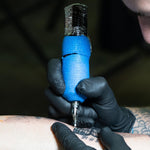
A coil machine is the traditional tool you already know. It uses electromagnetic coils to pull a heavy metal bar up and down, which drives your needle into the skin. That magnetic pulling action gives you the loud, classic buzz and the heavy hit you're used to.

The difference comes down to mechanics. Direct drive rotaries apply motor torque directly to the needle bar, producing continuous, even force across the entire stroke. Coil machines rely on electromagnetic cycles that repeatedly build and release force, creating a more pulsed power delivery. Consequently, a quality direct drive tattoo machine gives you consistent, strong power that never bogs down.
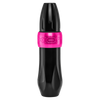
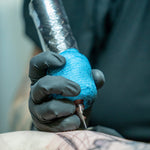
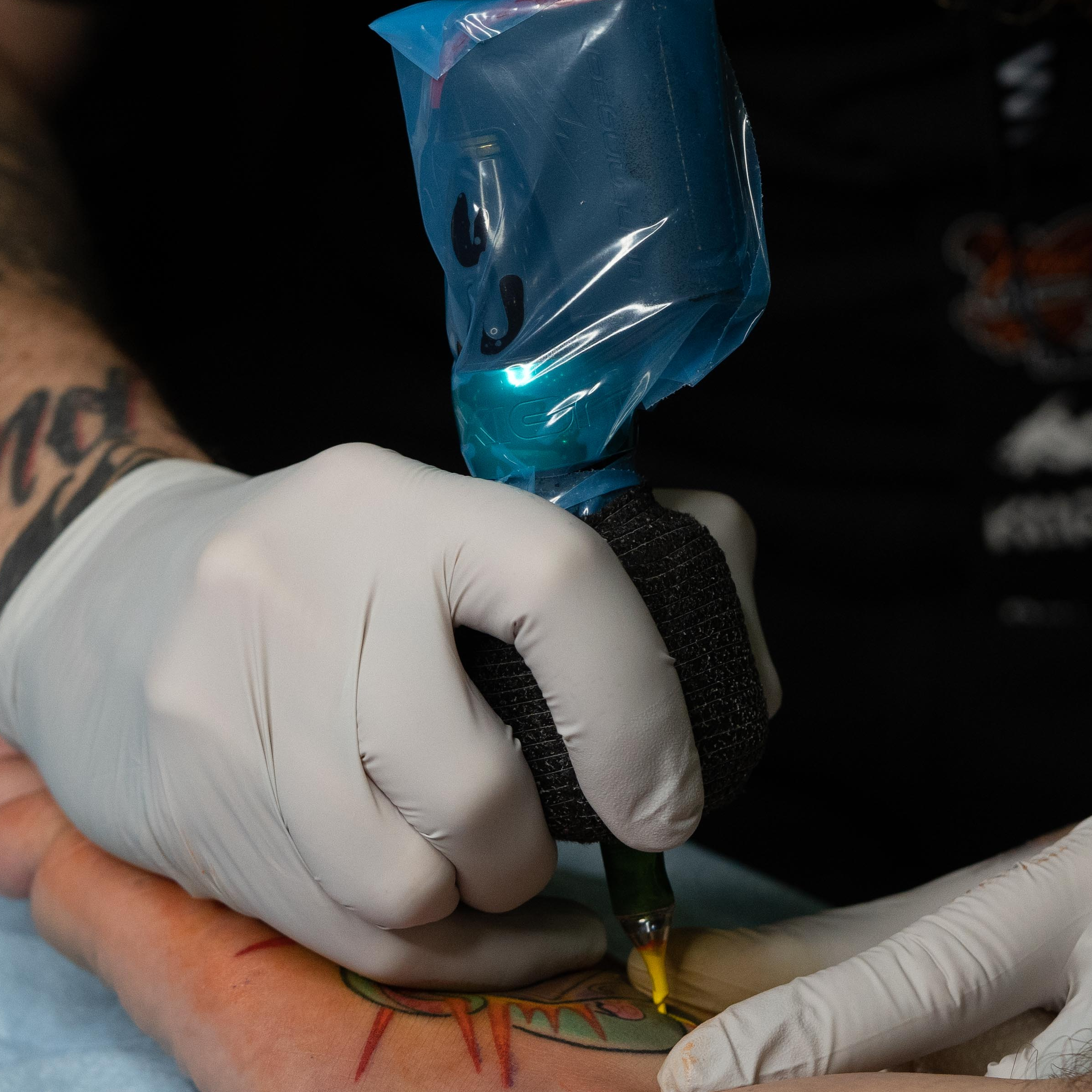
When switching to a rotary machine, many artists first notice a change in weight. Coil machines often use heavier metal frames (often iron or steel), and their electromagnetic coil assemblies add heft. Rotaries typically have fewer components and lighter housings (usually aluminum), which can reduce hand fatigue during long sessions.
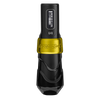
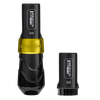
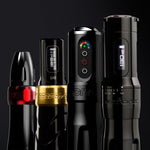
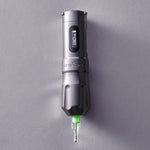
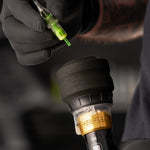
Your workflow gets a massive upgrade, too. Instead of setting up four heavy machines for lines, color, and shading, you just use one. You simply swap your needle cartridges in seconds and keep creating. And with modern technology, like adjustable stroke lengths you can find in premium machines like the FK One AdjustOpens a new window, the need for multiple machines truly is a thing of the past.
|
What you’ll notice |
Coil |
Rotary |
|
Feel / feedback |
More tactile “talk back” through buzz + vibration; you can feel the cycle and hit. |
Smoother, quieter feedback loop; less vibration, so you rely more on visual + stretch + hand control. |
|
Hit consistency |
Can be incredibly dialed-in, but performance depends on tune, setup, and components staying in spec. |
More consistent run behavior day-to-day with fewer mechanical variables to drift. |
|
Noise / vibration |
Iconic buzz and noticeable vibration—some love it, some (and clients) don’t. |
Quieter, lower vibration—easier to focus during long sessions. |
|
Weight / balance |
Often heavier frames built to support coils; can add up over long days. |
Typically lighter and better balanced, which can mean less strain over time. |
|
Tuning / maintenance |
Springs, contact points, and components need attention—coils demand upkeep. |
Generally more “plug in and go” with lower ongoing tuning demands. |
|
Cartridges / workflow |
Cartridges are possible, but not always simple—depends on setup. |
Built for modern cartridge workflows; fast swaps can replace running multiple setups. |
|
Day-to-day consistency |
Amazing when it’s locked—but small changes can shift how it runs. |
Fewer parts to “drift,” so it’s easier to get the same feel day after day. |
What Changes in “Feel” When Switching to a Rotary Machine

The biggest hurdle in adjusting to the rotary is the "give." A coil machine naturally bounces back a little when it hits the skin. This natural give happens because the needle is driven by a physical spring that yields slightly upon impact. While coils have this natural flexibility, the give is still adjustable: to move from a soft to a hard hit, you have to adjust the spring tension, which is a more technical and manual process.
In contrast, rotary machines don't have natural give. They’re direct-drive or cam-driven, meaning the motor pushes the needle with constant force. However, some brands offer advancements like eGive technology that allow you to digitally control how the motor responds to skin resistance, mimicking that classic coil feel without the manual tuning.
Adjusting Your Hand Speed and Voltage
A rotary machine hits hard and steady. It doesn't back off. Because of this, you have to adjust your hand speed and voltage.
If you move too slowly, you can overwork the skin. You're in full control now, so your precision matters more than ever.
The Sensory Transition: Silence and Vibration
You also have to get used to the silence. Without that loud coil buzz, you must learn to trust your eyes and the feel of the skin. However, this lack of vibration also comes with benefits, giving you less overall hand fatigue, especially during longer sessions.
Why Your Coil to Rotary Transition Requires Practice
Don't take a brand-new rotary machine straight to a paying client. It’s like going back to getting your beginner tattoo machineOpens a new window. True masters practice before they perform.
Your coil to rotary transition takes a little time. You need to relearn your hand speed on fake skin first.
You also need to feel how cartridge membranes act like the "give" of a standard needle on a bar. Take the time to master your new tool. When you finally hit real skin, you'll be unstoppable.
Mastering eGive with FK Irons
If you miss the feedback of a coil machine, FK Irons is the best rotary machine for coil artists. Through their PowerBolt batteries or the Darklab app, you can access eGive functionality. This allows you to electronically simulate the "give" you’re used to, giving you more versatility without needing to pull out a wrench to adjust springs.
The eGive settings typically range from 0 to 3:
- Setting 0: No give. The motor hits with full, consistent force.
-
Settings 1–3: These provide increasing levels of "give," with 3 offering the most flexibility.
By adjusting these levels, you can find a setting that feels natural for your specific style, whether you’re lining with a solid hit or shading with a softer touch.
Check out the full range of FK Irons machines to find the perfect fit for your workflow.
Does a Rotary Machine Cost More Than a Coil?
Yes, the upfront cost of a high-quality rotary machine is usually higher than a basic coil machine. But you have to look at the big picture.
Coil machines are cheaper to buy, but they are expensive to maintain. You are constantly replacing springs, tweaking contact screws, and tuning the machine. Plus, you usually need to buy at least two coils—one for lining and one for shading.
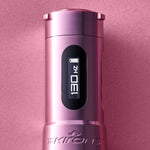
With a premium rotary machine like the FK Irons ONEOpens a new window, your initial investment pays for itself. You only need one machine to line, shade, and pack color. It’s a low-maintenance, high-performance tool built to last, saving you time and money in the long run.
How Long Do Rotary Tattoo Machines Last?
A professional rotary machine is built to outlast a traditional coil setup.
Coil machines rely on exposed electromagnetic parts that wear down, rust, or break over time. A rotary machine houses a highly efficient, protected electric motor.
If you keep your rotary clean and use high-quality cartridges, the motor will run consistently for years without ever needing to be "tuned." You don't have to rebuild your machine; you just turn it on and get to work.
Your Next Machine Should Work as Hard as You Do
You didn't get this far in your career by playing it safe. If you want to leave a real mark in this industry, your tools need to keep up with your hustle.
Making the switch from coil to rotary is a big step, but you don't have to guess your way through it. If you want to see exactly how our machines perform before you make the jump, watch top artists push the limits in our video libraryOpens a new window.
Ready to find the perfect fit? You can put our whole lineup head-to-head. Use our tattoo machine comparison guideOpens a new window to find the exact stroke, weight, and power that matches your daily workflow. And if you still have questions about dialing in your new setup, we've got your back. Just reach out to our teamOpens a new window and we'll make sure you have the right weapon in your hand.
It's time to stop fighting your equipment and start mastering your craft. Step up, stand out, and become unstoppable.