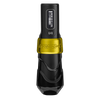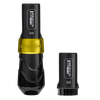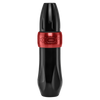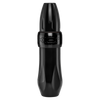


Tattoo machine voltage changes more than just speed. It affects how fast your needle moves, how hard your machine hits, and your overall healed results.
In this guide, you’ll learn what tattoo machine voltage really controls and why copying another artist’s settings doesn't always work. You’ll also find a range that fits your machine, your hand speed, and the skin in front of you so you can work with total confidence.
What Tattoo Machine Voltage Actually Controls
Tattoo machine voltage controls how your machine runs while you work. In simple terms, it changes needle speed and power behavior. When you raise the voltage, the needle cycles faster, and the machine hits harder. When you lower it, the needle moves slower, and the hit feels softer.
That change affects more than how the machine sounds or feels in your hand. It can change how clean your lines look, how easily color goes in, and how much stress the skin takes. A setting that's too high can make the machine feel too aggressive. A setting that's too low can make the machine feel weak or inconsistent.
What’s a Good Tattoo Machine Voltage for Beginners?
A good tattoo machine voltage for beginners usually falls within a safe, middle range. For many setups, that means around 6V to 8V for shading and 7.5V to 9V for lining and color packing. These are good starting points, but they’re not fixed settings.
The right voltage can change based on your machine, stroke, give, hand speed, needle choice, and how the skin responds. The goal isn't to find one perfect number right away. It’s to start in a workable range, make small adjustments, and learn how your machine feels when it is running clean, steady, and under control.
A Quick Summary Overview
|
Tattoo Technique |
Starting Voltage Range |
What It Usually Feels Like |
What to Watch For |
|
Lining |
7.5V to 9V |
Faster cycle, stronger hit, crisp line potential |
Too high can feel aggressive and cause more trauma |
|
Shading |
6V to 8V |
Softer hit, smoother movement, more control |
Too low can make shading look light or patchy |
|
Color Packing |
7V to 9V |
Steady power, solid saturation, more direct feel |
Too high can overwork the skin fast |
Important Note: These are starting ranges, not fixed rules. The best voltage depends on your machine, stroke, give, needle choice, hand speed, and how the skin responds.
Why the Same Voltage Feels Different on Different Tattoo Machines

Two machines can both be set at 8V, but one may feel smooth while the other feels aggressive. That’s because voltage is only one part of the equation.
Machine design plays a big role in power delivery. Motor type, stroke length, and give all affect how that voltage turns into movement at the needle. A machine with an efficient motor may feel strong and steady at a lower setting. A machine with a different build may need more voltage to get a similar response.
How Motor, Stroke, and Give Change Power Behavior
Motor, stroke, and give all affect how a tattoo machine feels, even at the same voltage. Each one changes power behavior in a different way.
- Motor affects how steady the machine runs and how it delivers force through the needle. A strong, efficient motor can feel more consistent, even at a lower setting.
- Stroke changes how much force goes into each hit. A longer stroke usually feels punchier and more direct. That can help with certain types of work, but it also takes more control. If the voltage is too high, the machine can feel too aggressive in the skin.
- Give changes how soft or firm the hit feels. More give can make the machine feel softer and more forgiving. Less give can make it feel firmer and more responsive.
This is why one machine may feel strong at 7.5V, while another needs a different setting to give you the same result.
Signs Your Tattoo Machine’s Voltage is Too High
A voltage setting that’s too high can make your machine feel harder to control. It may seem fast and strong at first, but the skin usually tells you when the setting is too aggressive.
Some common signs include:
- The skin gets irritated fast
- You see more trauma than expected for the work you're doing
- The machine feels too aggressive for the area
- You have to slow your hand down just to keep up
When this happens, the machine may be hitting faster or harder than the skin needs. That can make it harder to work cleanly and can increase unnecessary stress on the skin.
Signs Your Tattoo Machine’s Voltage Is Too Low
A low voltage setting can make the machine feel like it’s falling behind. You may notice the problem in both the tattoo result and the way the machine feels while you work.
- Lines look weak, dotted, or uneven
- Saturation takes too many passes
- The machine feels like it’s dragging
- You’re moving faster than the machine can support
When this happens, the machine may not be giving the needle enough speed or force to match your hand speed. That can lead to patchy results, less control, and more work than needed to get clean saturation.
Why Beginners Shouldn’t Copy Another Artist’s Voltage Exactly

It’s easy to see a pro working at a certain voltage and think that number will work for you, too. In reality, that setting is tied to their specific machine, stroke, and hand speed.
Even the same machine can feel different from one artist to another. Small changes in how you hold the machine or move your hand change the result. Copying a number without understanding the "why" can lead to uneven results or more skin trauma. Your goal is to learn how your machine responds to you.
How to Find Your Personal Tattoo Machine Voltage Range
Finding your personal voltage range takes practice, but it doesn't have to be complicated. Start with a safe, common range for the type of work you're doing, then make small changes as needed. Big jumps can make it harder to feel what's really changing.
A simple way to find a voltage range that works for you is to focus on a few key things:
- Start in a safe, common voltage range
- Make small adjustments instead of big jumps
- Watch how the skin responds
- Pay attention to sound, vibration, and resistance
- Notice how clean and controlled the pass feels
- Track what works by machine, setup, and techniques
Does Higher Voltage Mean Better Saturation?
No.A higher setting can make your machine run faster and hit harder, but that doesn’t guarantee cleaner or more solid color.
If the voltage is too high for your machine or hand speed, you can overwork the skin before the area is fully saturated. That can make the skin harder to work with and affect the result. Good saturation comes from control, steady technique, and a machine setting that matches the way you work.
In many cases, better saturation comes from using the right voltage, not the highest one. The goal is to find a range where the machine feels smooth, consistent, and easy to control.
A Simple Practice Method on Fake Skin
Fake skin is a good place to learn how voltage changes your machine’s behavior… without the added pressure of potentially making a mistake on a client..
Here’s how to practice on fake skin:
- Practice lining, shading, and packing on fake skin using different voltage settings.
- Repeat the same design or the same group of lines at each voltage so you can compare results.
- Keep your hand speed consistent every time.
- Change only the voltage—don’t switch needles, depth, or speed.
- Afterward, compare the results: look at line quality, smoothness, ink saturation, and how the machine felt.
You can also check out TikTok, Insta reels, or forums to see how other artists are practicing on fake skin. Over time, you’ll get a better feel for the voltage range that works for lining, shading, or color packing with your setup.
Common Voltage Mistakes New Tattoo Artists Make
It’s normal for beginners to spend a lot of time looking for the right voltage. The problem is that the wrong habit can make learning harder than it needs to be. A better approach is to focus on control, consistency, and how the skin responds.
Some of the most common voltage mistakes include:
- Using one voltage for everything
- Turning the voltage up instead of slowing your hand down
- Ignoring machine design and setup
- Copying another artist’s settings exactly
- Chasing speed before control
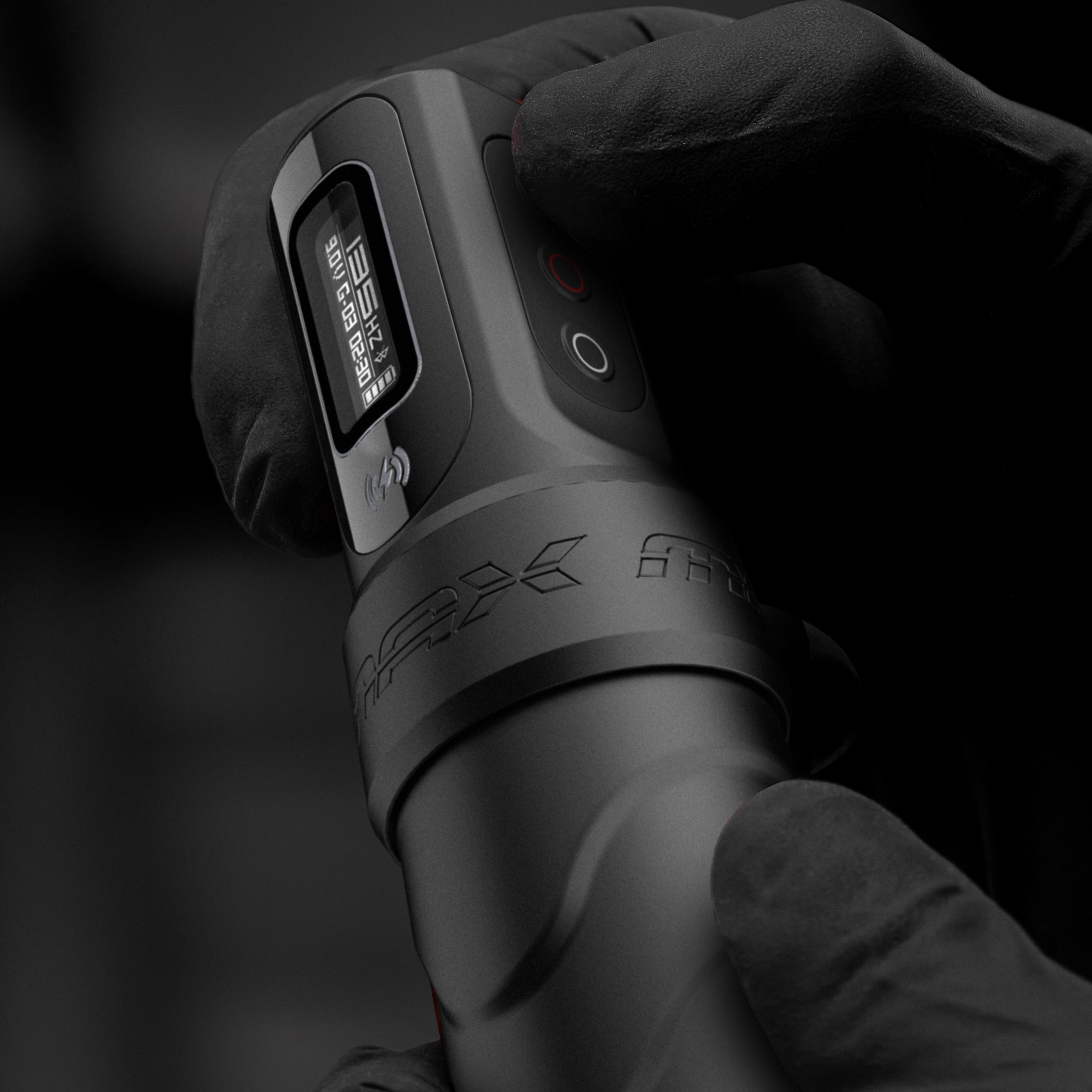
- Paying more attention to the display than the skin
Find a Tattoo Machine and Power Supply That Give You More Control
When your machine and power supply respond the way you expect, it becomes easier to fine-tune your voltage, match your hand speed, and stay more comfortable through longer sessions.
Explore FK Irons tattoo machinesOpens a new window and FK power suppliesOpens a new window to build a setup that feels more balanced in your hand and more predictable in the skin. For a deeper look at how settings affect your results, read How Machine Settings Affect Linework, Shading, and ColorOpens a new window.