
You're ready to master your tattoo machine and push your skills to the next level. This comes down to the settings you choose and the grip, both of which impact the quality of your work.
This is your go-to guide for tattoo machine settings. We'll show you how weight and balance affect your control, how vibration impacts your work, and how to dial in your voltage.
Why Every Tattoo Machine Feels Different
Every tattoo machine has its own personality. You might notice that one machine feels solid and steady, while another feels light and fast. These differences aren't just in your head. Both tattoo machine feels come down to how the machine is built and how it moves.
Weight, Balance, and Ergonomics

The physical feel of your tattoo machine is everything.
Let's look at how the build of your machine impacts your daily work.
Weight
The weight of your machine determines how much effort your muscles put into every stroke. A machine that feels too heavy can lead to hand fatigue and make it harder to maintain your flow during a long session. Coil tattoo machines are notorious for being the heaviest machines out there. They can be hard-hitters and excellent performers, but their heft requires a practiced hand.
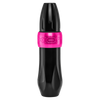
That’s why rotary, pen-style, and wireless tattoo machines have become so popular lately. They’re lighter in weight than a coil, and choosing a lightweight tattoo machine reduces hand fatigue or wrist strain.
Balance
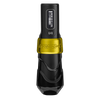
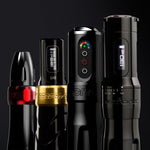
Where the weight sits in your machine is just as important as the total weight itself. A machine with a balanced center of gravity feels steady and gives you more precision. There are also forward-weighted machines, like our EXO, which comes with other benefits: better downward needle pressure and reduced wrist fatigue.
However, some artists prefer a balanced center rather than a forward weighted machine. Moreover, if the machine is back-heavy, you might find yourself fighting to keep it upright. Finding a balance that works all comes down to experimenting with different machines and practicing with different weights, balances, and designs.
Ergonomics (The Secret to Your Best Lines)
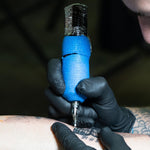
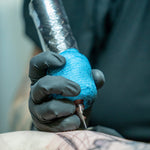
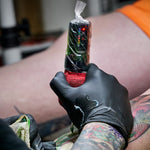
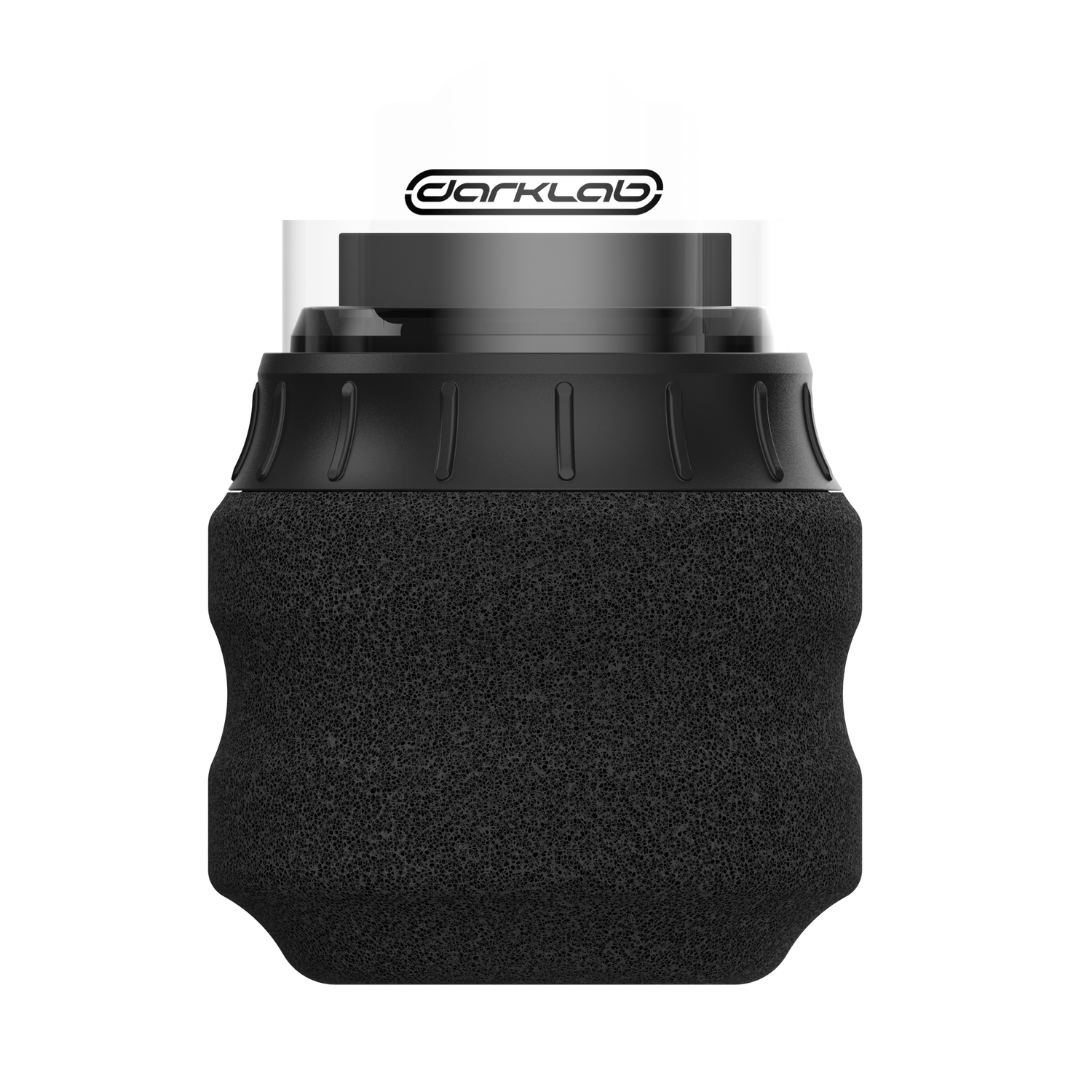
Proper ergonomics and a balanced setup are the keys to pulling your best lines. When you aren't distracted by hand pain, your movements become more confident and smooth. Ergonomic grips are often contoured, tapered, or indexed which provide secure resting spots for your index finger. As with anything, finding the right grip for your hand’s anatomy (and your preference) comes down to experimentation.
Consistent practice with a reliable tattoo machine and ergonomic grip builds the muscle memory you need. Once you find a grip that lets you wield your tattoo machine effortlessly, you’ll unlock better precision in your linework. It’s easier to pull clean, bold lines when you’re not fighting carpal tunnel or constant pain.
Explore our selection of ergonomically designed tattoo gripsOpens a new window built for maximum comfort and precision.
Pro-Setting Tip: If you're a beginner, start with a centered or slightly front-weighted setup. This helps you maintain needle depth without having to press down too hard, which saves your hand from early fatigue.
The Science of Stroke Length and How to Find Your Rhythm

Stroke length also changes how your machine feels in your hand. It affects the hit, the feedback through the grip, and how much control you have during each pass. When your stroke matches your style, the machine feels smoother, more predictable, and easier to work with.
Short Stroke (2.5mm – 3.0mm)
Short strokes feel smooth, fast, and forgiving. The hit is softer, which many artists prefer for black and gray shading or soft color blends where you want to build up layers gradually.
Medium Stroke (3.5mm)
The 3.5mm stroke is the balanced middle ground. It feels stable and versatile, offering enough punch for lining while staying smooth enough for shading and packing.
Long Stroke (4.0mm – 4.2mm+)
Long strokes feel stronger and more direct. They deliver a firmer hit, which many artists like for bold lines and packing solid color efficiently.
Pro-Setting Tip: To find your rhythm, match your stroke to your hand speed. Use a longer stroke if you move quickly and want solid lines in one pass, but switch to a shorter stroke if you prefer a slower, more layered approach to shading.
Why Some Machines Vibrate More
Vibration is one of the biggest factors in how a tattoo machine feels during a session. Excessive buzzing is a nuisance. It can cause your hand to go numb and lead to shaky lines (and overall discomfort). To perform at your best,you need to understand how different motor types create movement and what that means for your hand feedback.
Coil Machines
These create the classic buzzing sound we associate with OG tattoo shops. Coil machines work using electromagnetic pull, which creates a classic "hammer" effect. This design naturally produces more vibration because of the rapid physical contact between the armature bar and the coils.
While some artists enjoy the heavy hand feedback of a coil machine for bold work, the constant buzzing can lead to faster hand fatigue. Understanding this trade-off is essential for any explorer who wants to balance power with long-term comfort.
Rotary Motors
Modern rotary and wireless machines use a circular motion to drive the needle up and down. Because the movement is continuous and smooth, rotaries usually have much less vibration than older machines.
This low-vibration feel is a game-changer for long sessions because it keeps your hand fresh and your control sharp. If you're looking for gear that feels steady and quiet, a high-quality rotary is your best ally on your journey to mastery.
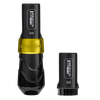
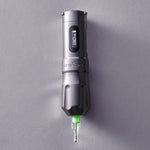
For the best rotary machine build for more control and innovation as you upgrade your skills, look at the Flux Max enhanced ergonomic designOpens a new window. Its modular design allows you to work with efficiency while the motor keeps the feedback smooth and manageable.
Hand Feedback and Precision
The feedback you feel in your hand tells you exactly how the needle is interacting with the skin. If a machine vibrates too much, it can mask the subtle "read" you get from the needle's resistance.
Choosing a machine with a dampening system or a high-end motor ensures you're getting the right information through your grip.
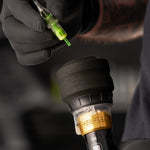
Pro-Setting Tip: Check your needle tension and cartridge seating if you notice a sudden increase in vibration. Often, a small adjustment in how the cartridge sits can dampen the buzz and give you back that smooth, precise feel you need for clean lines.
Tattoo Machine Voltage vs. Hand Speed
Finding the Right Feel
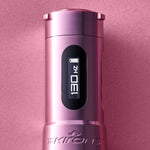
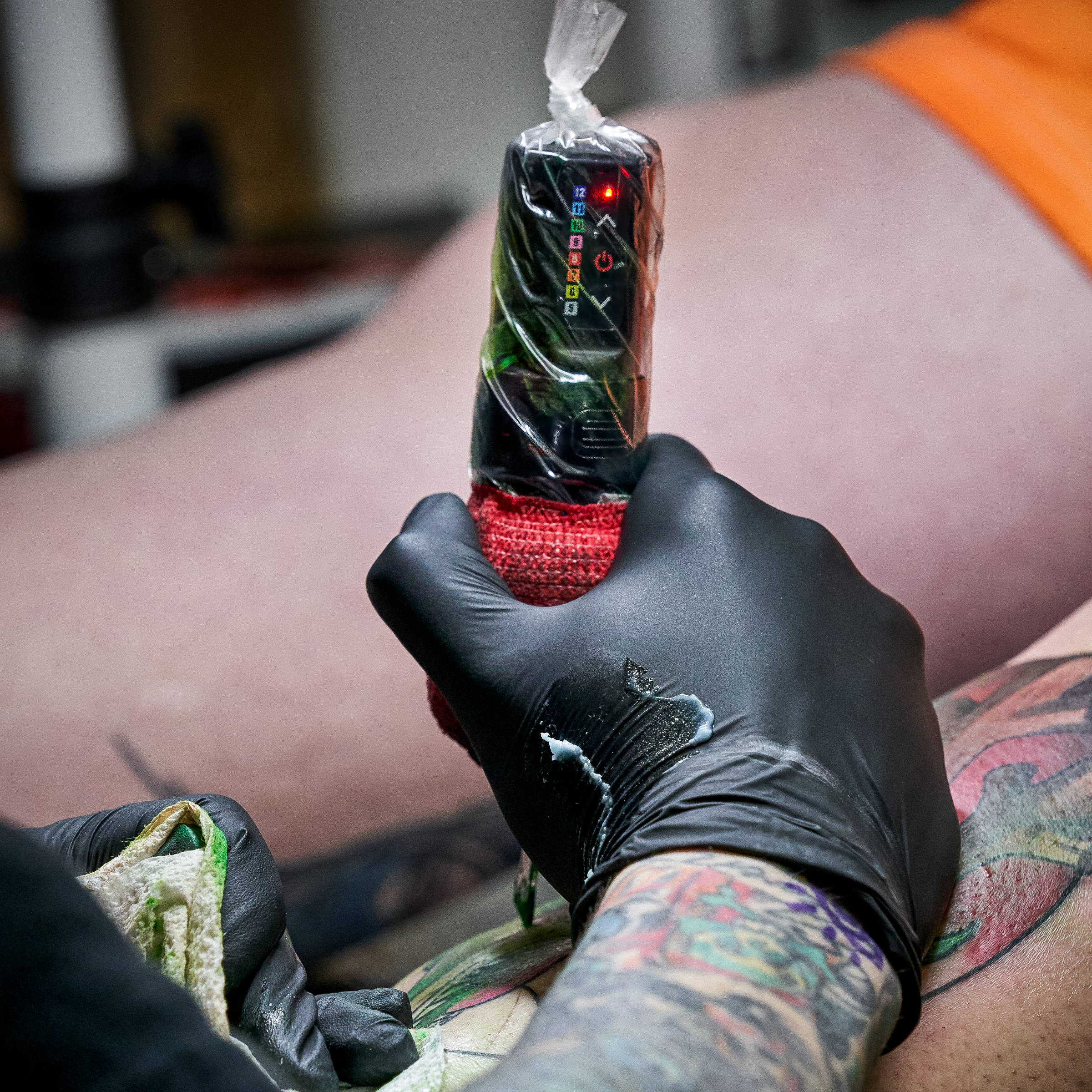
Different tattoo machines have different voltage ranges, and voltage changes how your machine responds in your hand. Turn it up and the machine feels faster and more reactive. Turn it down and it feels slower, softer, and easier to guide.
The key is matching your voltage to how quickly your hand moves. If the machine is running much faster than your hand, it can feel jumpy and harsh on the skin. If it’s too slow, the machine can feel like it’s dragging or struggling to keep up.
Finding Your Flow
As you work, you’ll learn to adjust your voltage until the machine moves in sync with your hand.
Higher voltage tends to feel quicker and punchier, which many artists like for confident lines. Lower voltage feels smoother and more controlled, which can make soft shading and detail work easier.
Different machines will react differently at the same voltage, so part of dialing in your setup is simply finding the speed and feel that matches the way you tattoo.
Which Tattoo Machine Feels Right for You?
Practice and don’t give up. First, find a tattoo machine that feels good in your hand. Then practice with it again and again until you understand how its settings and your handle of it affect the performance. Stick with a setup that works, and your hand will eventually move with a confidence that feels like second nature.