

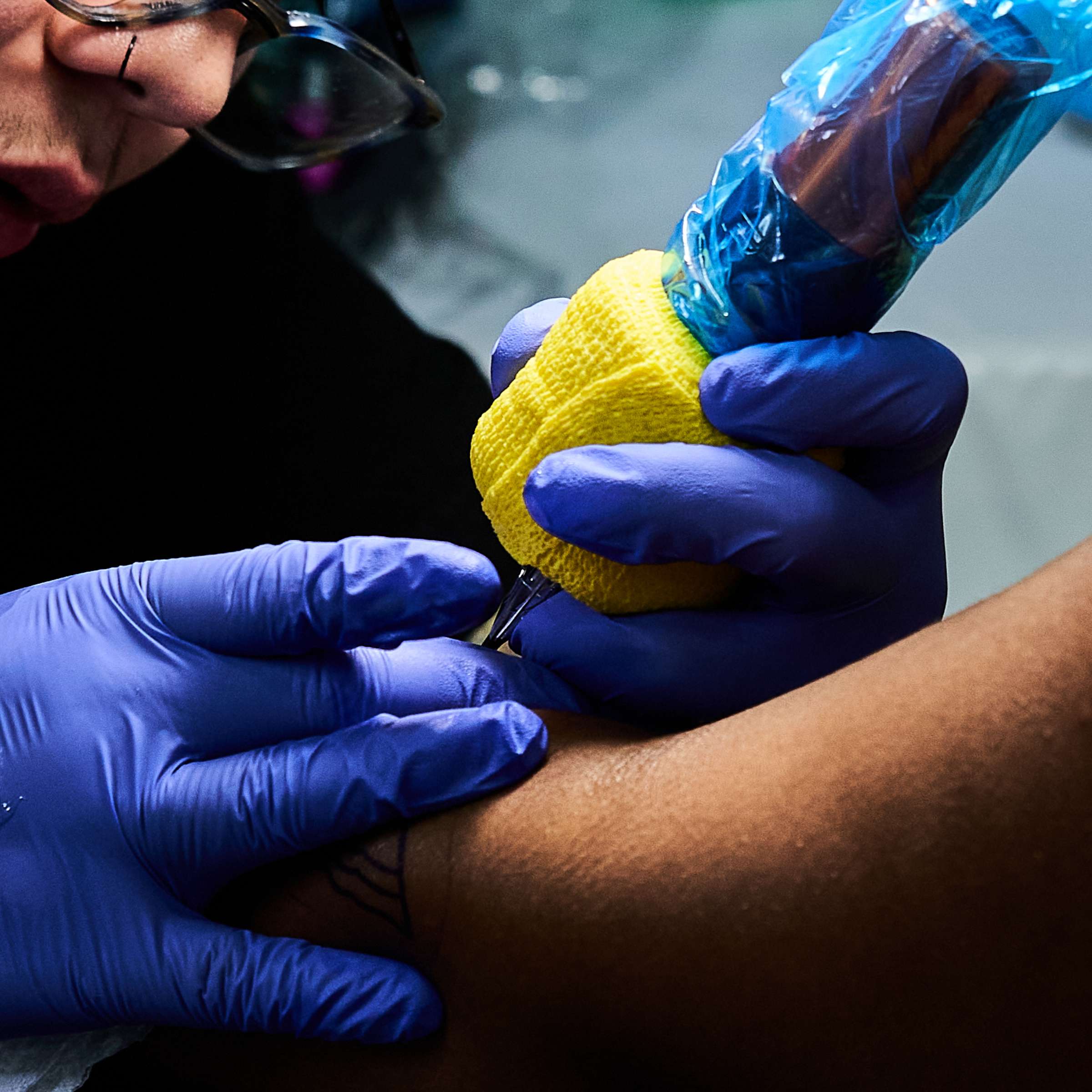
Changing needle groupings mid-session shouldn't throw you off. But when you're early in your career, going from a tight liner to a wide mag can feel like a huge reset, and you have to adjust your settings all over again.
But you don't need to memorize a voltage chart to get this right. Real confidence comes from understanding how your machine,needles, and technique all work together. Once those relationships make sense, you can adjust more intuitively.
Let's break down how to move between groupings without second-guessing your settings.
Why There's No Universal Voltage Setting
There’s no single correct voltage, and that’s not a problem to solve. It’s just how tattooing works. Every machine, needle grouping, power supply, and artist is different, so the right setting for one setup won’t match another.
That said, most modern rotary tattoo machines generally operate within a baseline range of ~5 to 10 volts. Within that, where you land depends on your machine’s stroke, the needle grouping, and how you work.
That’s why copying someone else’s exact numbers rarely works. Their machine, their hand pressure, and their stroke length aren’t yours. Use other artists’ settings as a starting reference, but expect to adjust from there until the machine feels balanced in your hand and on skin.

How Needle Grouping Size Affects Your Machine
Needle grouping size has a direct impact on how your machine runs. More needles create more drag in the skin, so your machine needs more power to hold a steady speed. Fewer needles create less drag, so you can usually pull the power back.
Smaller Groupings = Less Force –> Tight Liners & Detail Work
Larger Groupings = Stronger Hit –> Wide Mags & Bold Packing
The table below gives you a rough starting point.
|
Grouping Size |
Examples |
General Power Need |
|
|
Small |
Single needles, tight liners |
Lower:
|
|
|
Medium |
Small mags, round shaders |
Moderate
|
|
|
Large |
Wide mags, large rounds |
Higher
|
Keep in mind these are starting points, not fixed rules. Your machine and stroke length will shift where you actually land.
Match Your Settings to the Task
Each part of a tattoo asks something different from your machine. Lining, shading, and color packing each have their own sweet spot, so it helps to think about the task before you think about the number.
Lining
Lining usually uses smaller, tighter groupings. You want clean, sharp lines, so most artists run a slightly higher speed with a controlled hand. Because there's less drag, you often don't need a heavy hit. Focus on a steady pass and consistent depth.
Typical voltage range for lining: ~6–9V (most setups land around 6.5–8V)
Shading
Shading covers more ground and often uses mags. Many artists pull the power back a little for soft, smooth gradients. Lighter settings give you more control over how much ink goes in, which helps you build tone gradually instead of going too dark too fast.
Typical voltage range for shading: ~5.5–8V (most work sits around 6–7.5V)
Color Packing
Color packing demands more from your machine. You're moving more ink into the skin with larger groupings, so you'll usually need a stronger, more consistent hit. The goal is solid, even saturation without overworking the skin.
Typical range for color packing: ~6.5–9.5V (most artists land around 7–9V depending on stroke and hand speed)
If you want help choosing a machine that handles all three jobs well, take a look at our guide to the best FK Irons machines for lining, shading, and color packingOpens a new window.
Hand Speed and Machine Speed Work Together
Your hand speed and machine speed depend on each other. When you change your grouping, you're often changing how fast you move, too. A big mag for packing moves differently than a tight liner, so your hand naturally adjusts.
The key is to change one thing at a time. If a pass feels “off” after switching groupings, try adjusting your hand speed first before you make a big jump in voltage. Moreover, small corrections to your hand often fix the issue without touching your settings at all. That habit keeps you from chasing problems that weren't really about power.
How Stroke Length Changes the Way Groupings Behave

Stroke length affects how your machine hits, and it interacts with your grouping choice.
- Shorter Stroke = Softer Hit –> Smooth Shading & Soft Color
- Longer Stroke = Harder Hit (More Punch) –> Sharp Lining & Bold Packing
So the same voltage can feel completely different on two machines with different stroke lengths. That's why feel matters more than the number on the screen. If you want to go deeper on this, our breakdown of how machine settings affect linework, shading, and colorOpens a new window explains how these pieces fit together.
Start With Manufacturer Recommendations, Then Fine-Tune
Always start with the settings your machine's manufacturer suggests. Those recommendations exist for a reason and give you a safe, reliable baseline. From there, you fine-tune based on feel and results.
Therefore, your process for any new grouping looks simple:
- Set your machine to the recommended starting range.
- Do a test pass on practice skin if you can.
- Watch how the needle moves and how the skin responds.
- Adjust in small steps until it feels right.
Watch the Skin, Not the Voltage Display
Your most useful feedback comes from the skin, not the screen. The voltage display tells you a number, but the skin tells you the truth. Look for clean lines, even saturation, and a surface that isn't getting torn up or overworked.
However, beginners often fixate on hitting a specific number and ignore what's actually happening in front of them. Train yourself to read the skin first. Over time, you'll start to predict how a grouping will behave before you even adjust your settings.
Make Small Adjustments Instead of Big Jumps
When something feels off, resist the urge to make a big change. Small adjustments give you control and help you understand what each change actually does. Big jumps make it hard to tell what fixed the problem and what made it worse.
Consistency also matters more than finding the perfect number. A setting that's slightly off but steady will usually give you better results than an ideal you can't repeat. Reliable beats perfect, especially while you're still building muscle memory.
Keep Notes on What Works
Once you find settings that work well with a grouping you like, write them down. A simple note saves you from rediscovering the same setup over and over.
Track a few basics each time:
- The machine and stroke length you used
- The needle grouping and configuration
- Your voltage or speed setting
- The task: lining, shading, or color packing
- A quick note on how it felt and how the skin healed
Over time, these notes become your own personal reference, built around your real machines and your real technique.
Confidence Comes From Understanding, Not Memorizing
You don't build confidence by memorizing voltage charts. You build it by understanding how your machine, your needle grouping, and your technique connect. Once you get that, switching between groupings stops feeling like a gamble and starts feeling like a decision.
So start with the basics, make small changes, watch the skin, and keep your own notes. Put in that work, and you'll move between groupings with control, clarity, and confidence every time you pick up your machine.