
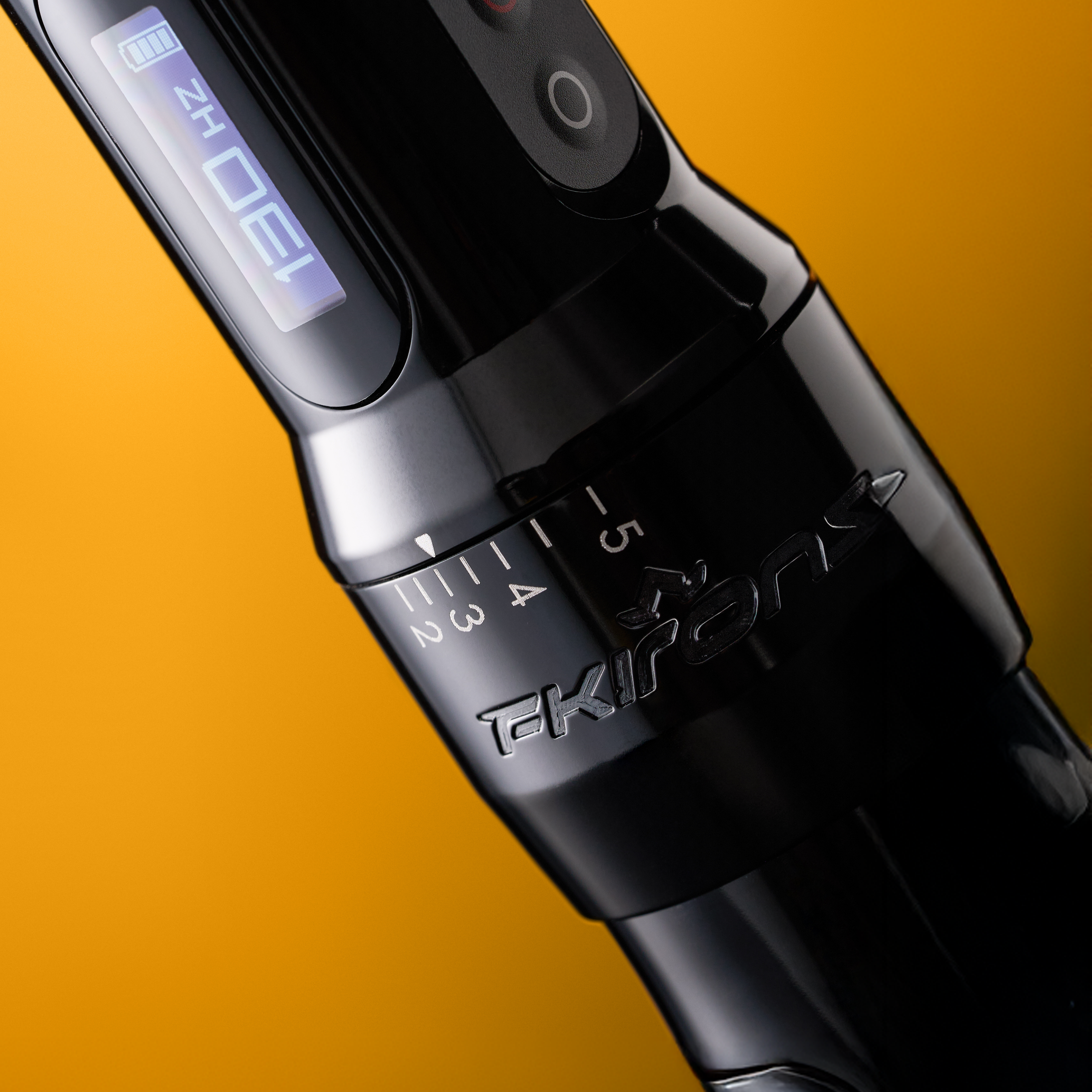
You can run the perfect voltage, load up the right needle, and still end up with wobbly lines or patchy shading. Sometimes, stroke length is the culprit.
Stroke length is one of the key factors shaping how your tattoo machine performs on skin. Measured in millimeters, it determines how far the needle travels and directly impacts power, saturation, and control. From soft, layered shading to bold, high-impact lines, understanding stroke length helps you dial in the right feel for every style and get more intentional results from every pass.
What Stroke Length Actually Is
Stroke length, sometimes called throw, is the distance your needle travels in one full cycle. Every time the machine cycles, the needle pushes down and pulls back up. The measurement of how far it covers in that round trip is your stroke length. It's usually measured in millimeters, and most machines fall somewhere between 2.0mm and 4.5mm.
The way that motion is created depends on your machine.
- On a coil machine, stroke is set by how far the armature bar drops before it hits the needle bar.
- On a rotary or pen machine, it comes from the cam wheel and how far off-center it sits, which is what pulls the needle up and down as the motor spins.
The mechanics are different, but the result is the same. A longer stroke gives the needle more room to build speed and force, so it hits harder. A shorter stroke covers less distance, so it moves faster and lands softer.
Longer stroke = More distance → Harder hit
Shorter stroke = Less distance → Softer hit


Stroke Length vs Needle Depth
These two get mixed up constantly, but they control different things. Here's the clearest way to tell them apart:
|
|
Stroke length |
Needle depth |
|
What it is |
How far the needle travels in one cycle |
How far the needle sticks out past the tip |
|
Set by |
The machine, through the cam or armature |
Your grip or tube, which you adjust by hand |
|
What it controls |
Hit, speed, and how far the needle pulls back |
How deep the ink goes into the skin |
|
Measured in |
Millimeters of travel |
Millimeters of exposed needle |

The reason they're so easy to confuse is that they work together. Your stroke decides how far the needle retracts into the tip on each cycle, and that pull-back is when the needle picks up fresh ink. So your needle depth has to fit inside the range your stroke gives you.
This is why a short stroke needs a short depth. If you run a short stroke but push the needle out too far, the needle never retracts far enough to reload. It just pokes in and out near the surface without grabbing new ink. The result is patchy lines, weak color, and a tattoo you have to keep passing over to fix.
Therefore, the goal is simple. Match your depth to your stroke, and the needle reloads cleanly on every cycle. That's what gives you smooth, saturated work in fewer passes.
The Three Things Stroke Controls
Before we get into specific stroke lengths, it helps to know what stroke is actually changing. Every adjustment you make comes down to these three factors:
- Hit: This is how hard the needle strikes the skin. A longer stroke hits harder and drives ink deeper in one pass. A shorter stroke hits softer and lands gentler, so it's easier on the skin.
- Needle speed: A shorter stroke has less distance to cover, so the needle cycles faster. A longer stroke takes more time per cycle, so the needle moves slower but with more power behind it.
- Max depth: Stroke sets the ceiling for how far your needle can travel out and back. A short stroke caps your depth low, while a longer stroke opens up more range to work with.
These three move together every time you change your stroke. Once you can feel how hit, speed, and depth shift, picking the right stroke for a technique gets a lot easier. So let's look at what each stroke length does best.
Short vs Medium vs Long Stroke
Most artists reach for different stroke lengths during a single session. Here's how the three ranges compare and what each one does best:
|
|
Short stroke (2.0 to 2.5mm) |
Medium stroke (3.0 to 3.5mm) |
Long stroke (4.0mm and up) |
|
Hit |
Soft and gentle |
Balanced, middle of the road |
Hard and powerful |
|
Needle speed |
Fast |
Moderate |
Slower |
|
Skin trauma |
Low, safe for multiple passes |
Moderate |
High, fewer passes |
|
Best for |
Soft shading, blending, black and grey, fine detail |
Color packing, shading, a bit of everything |
Bold single-pass lines, traditional and neo-traditional, packing |
|
Skill level |
All levels |
Great for beginners |
Experienced hands |
A short stroke moves fast and lands softly, so it causes less trauma and lets you build up smooth, seamless work over several passes. That makes it the go-to for delicate shading, blending, and the fine detail black and grey work depends on.

A medium stroke sits in the middle, which is why it's such a reliable all-rounder. It handles color packing and shading well and gives beginners room to learn without fighting the machine. It does struggle once you load up heavy liners or large magnums, since it can't hit hard enough to push that much ink in one pass.

A long stroke is the opposite end. The needle moves slower but hits hard, so you can pull bold lines in a single pass and pack color with real momentum. That power comes with more skin trauma, however, so it suits experienced artists who can place a clean line the first time.

For a deeper look, our comprehensive guOpens a new windowiOpens a new windowde on tattoo machine strokeOpens a new window digs into the mechanics.
Quick Reference: Best Stroke by Technique
If you just want the short answer, here's the best stroke length for each common technique:
|
Technique |
Best stroke length |
|
Lining |
Long stroke (4.0mm and up) for bold single-pass lines, medium for finer lines |
|
Shading |
Short stroke (2.0 to 2.5mm) for soft, smooth shading |
|
Color packing |
Medium to long stroke (3.5 to 4.0mm) for solid saturation |
|
Fine detail |
Short stroke (2.0 to 2.5mm) for control and precision |

Keep in mind these are starting points, not hard rules. Your hand speed, needle grouping, and personal style all shift what feels right, so treat the table as a guide and adjust from there. If you want to see which machines pair well with each technique, our guide to the best FK Irons machines for lining, shading, and color packingOpens a new window breaks it down further.
Fixed Stroke vs Adjustable Stroke
Once you know which strokes suit your work, the next question is how you want your setup to look.
The first is to run multiple fixed-stroke machines, each built for one stroke length. You might keep a short-stroke machine for shading, a medium one for packing, and a long one for lines. That gives you a dedicated tool for each job, but it also means more machines to buy, bag, and swap mid-session. Every switch breaks your flow.
The second is to use one adjustable-stroke machine. Instead of changing machines, you change the stroke on a single tool to match the task, which keeps your setup lean and your hands on the same familiar machine all session.
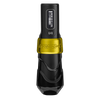
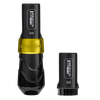
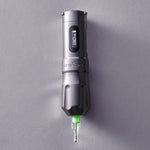
This is what the FK One AdjustOpens a new window was built for. Its patent-pending adjustable stroke technology lets you dial in any stroke from 2.0mm to 5.0mm in 0.5mm increments, and you can change it on the fly without powering down. So you can pull bold lines at a long stroke, then drop to a short one for soft shading, all without putting the machine down. That's the full range in one wireless machine, with the consistent FK power behind every pass.
Find Your Stroke One Project at a Time
There's no single right answer here, because stroke is personal. The lengths you reach for come down to your style, your hand, and the work you love to do.
Maybe you already know your go-to strokes, or maybe you're still finding them. Either way, the best thing you can do is experiment. Run the same design at different strokes, notice how the hit and the healed result change, and let that guide you. As you dial in what works, it's worth exploring the full FK Irons lineupOpens a new window to find the machine that fits how you work.
Once you understand stroke length, you stop fighting your machine and start working with it. And that's when the real growth in your art begins.