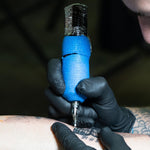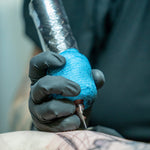


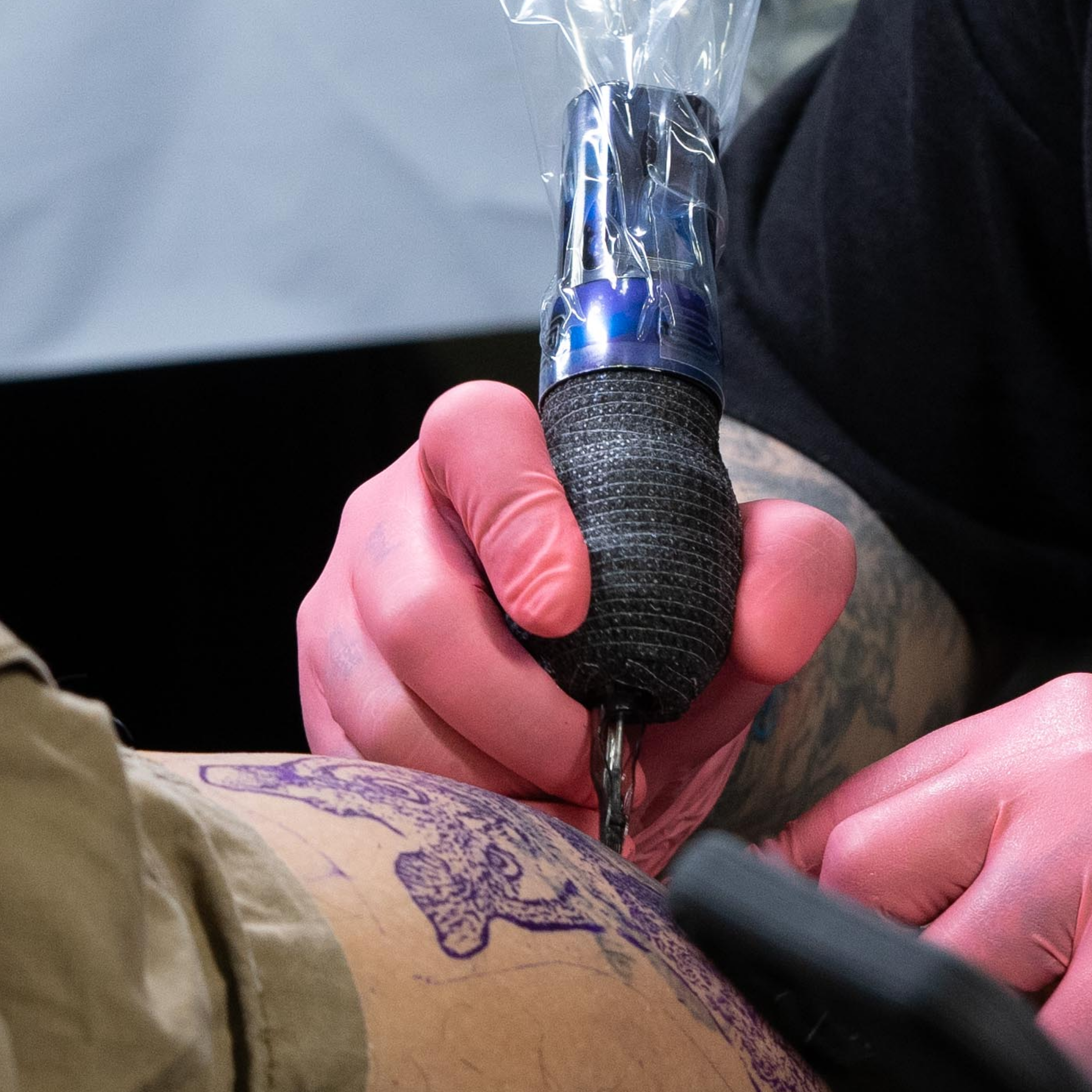
Needle depth has a direct impact on how well your work heals holds up over time.. Set it right and the ink sits exactly where it should. Set it wrong and you're looking at blowouts, fading, or mess-ups that are hard to fix.
This guide breaks down what the correct tattoo needle depth is, how to set it on any machine, and how to adjust it for skin, technique, and body location. By the end, you’ll be setting your needle depth with confidence.
What Is Tattoo Needle Depth?
Needle depth refers to how far the needle goes into the skin as you tattoo. The goal is to place pigment within the dermis, the layer just below the surface (or epidermis), where it can remain visible long-term .
Many tattoos are deposited approximately 1–2mm into the skin, but your ideal depth varies depending on anatomy, location, technique, and your approach. . That range places the ink in the dermis, which holds pigment well without causing too much trauma. Here’s a quick overview of how needle depth affects your tattoos.
|
Depth |
What happens |
|
Too shallow (in the epidermis) |
Ink fades fast as the outer skin sheds and renews |
|
Just right (in the dermis) |
Ink stays put, color holds, and skin heals clean |
|
Too deep |
Heavy bleeding, scarring, and blowouts |
Depth doesn't work on its own, though. It’s influenced by “needle hang,” or how far your needles protrude from the cartridge. It also pairs closely with your machine's stroke length which you can learn all about in our blog “Tattoo Machine Stroke Length: ExplainedOpens a new window.” Matching your stroke length and machine setup to your technique helps create a more predictable feel and response.
How to Set the Correct Needle Depth

Setting your depth means controlling how far the needle sticks out past the tip of the tube or cartridge. The method changes a little based on your machine.
Coil Machines With Tubes
Start by assembling your machine with the tube and needle bar in place, then hold it the way you would while tattooing. Run the machine and watch the needle move through the tube tip.
To adjust, loosen the tube vice and slide the tube up or down along the needle bar. As a starting point, many artists begin with a small amount of needle hang visible and adjust based on their machine, needle grouping, technique, and hand speed.
Rotary and Pen Machines With Cartridges
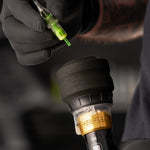
Cartridge systems make depth easier to manage. Most rotary and pen machines have a dial or collar near the grip that sets how far the needle extends.
Load your cartridge, turn the machine on, and adjust the dial according to your machine manufacturer’s recommendations.Start with less extension than you think you need, then test on practice skin before you touch a client. The grouping you load matters here too, so it helps to know how to switch between needle groupingsOpens a new window before you lock in your depth.
Needle Depth Settings for Different Techniques
Depth isn't one fixed number. It shifts based on the type of work you're doing.
Here's a quick reference for depth by technique. Please note that the numbers in this table are general starting points, not universal settings:
|
Technique |
General Approach |
|
Lining |
~Often uses a controlled, shallower setup for precision (~1.5mm) |
|
Shading |
Usually requires a setup that allows smooth pigment distribution (~2mm) |
|
Color packing |
Often requires efficient pigment saturation without excessive trauma (~2-2.5mm) |
Since different techniques require different approaches, many artists choose machines with features that let them fine-tune their setup — whether that means adjusting stroke length, changing needle groupings, or dialing in the feel they prefer for lining, shading, and color packing.
What Affects the Right Needle Depth

The correct depth also depends on who you're tattooing and where. These are the main factors that change your setting.
1. Skin Type and Condition
Thicker, tougher skin on the back, thighs, and calves can take a slightly deeper setting. Thinner, softer skin on the inner arms, ribs, and hands needs a lighter touch and less depth. Age plays a part too. Older skin is thinner and more fragile, so it needs a gentler setting, while younger skin usually handles standard depths without trouble.
2. Body Location
Skin thickness changes across the body.
- Fleshier spots like the outer arm or thigh handle standard depth well.
- Bony areas like the ribs, feet, and hands need a shallower setting to avoid extra pain and trauma.
- Skin that sits tight, such as the outer forearm, may take a bit more depth than looser areas like the inner bicep.
3. Machine Settings
Voltage, machine responsiveness, and hit can affect how the needle feels and how efficiently it deposits pigment, which may require adjustments to your setup.
- A harder-hitting machine can make your machine feel more impactful and more easily overcome resistance from the skin, so you may need less protrusion.
- A softer setup may need a little more extension to reach the same depth.
Because of this, it's worth learning how to master your voltage without overworking the skinOpens a new window so your depth and power wor together instead of against each other.
Common Needle Depth Mistakes to Avoid
A few depth mistakes show up again and again, especially early in your career. Here's what to watch for.
1. Going Too Deep
Going too deep is one of the most common errors, often because artists worry the ink won't hold. The signs are clear: heavy bleeding, swelling, and more pain than the spot should cause. Too much depth leads to blowouts, scarring, and slow healing. It doesn't make a tattoo more permanent. It just damages the skin.
2. Going Too Shallow
Working too shallow causes the opposite problem. If you keep passing over the same area and the ink still looks patchy or faded after healing, you're not reaching the dermis. Shallow work needs more sessions to cover properly, which costs your client time and money.
3. Using One Depth for Every Area
Setting the same depth for a ribcage as you'd use on a calf leads to trouble. Always check the area first and adjust before you start. A small test mark in a spot the design will cover confirms your setting before you commit.
4. Losing Depth Mid-Session
Holding steady depth through a long session is hard. Tiredness, shifting hand positions, and changing skin tension all pull your depth off. Because of that, check your setup now and then during longer pieces, and stay aware of your hand pressure and angle.
How to Test and Dial In Your Setup
Before you work on skin, spend time confirming your depth. A few habits make this easy.
Step 1: Practice on Synthetic Skin
Synthetic skin is a useful way to test machine settings and hand control, though it won't perfectly replicate working on real skin.. Run your lines and shading on it and watch how each depth changes the result. Pay attention to how the ink sits, how much trauma you cause, and how clean the final look is.
Step 2: Start Shallow, Then Go Deeper
On a real client, always begin with a shallower setting. You can add a little depth if you need it, but you can't take back damage from going too deep. Make a small test mark in a hidden spot and check how the skin reacts before you move on.
Step 3: Listen to Your Machine
Changes in machine sound can sometimes indicate changes in resistance or setup, but shouldn't be used as the only indicator of correct depth. Nevertheless, it’s always helpful to listen to your machine. If your machine stutters or “growls” or the tone shifts a lot, your depth might be off.
Step 4: Watch How the Skin Reacts
Keep an eye on the skin as you work. The needle should enter cleanly with little trauma, and a small amount of ink and plasma at the surface is normal. The skin shouldn’t show excessive trauma, swelling, or damage beyond what is expected for the technique.. If it stays dented or looks beat up, ease off your depth or pressure.
Give Every Pass the Consistency It Deserves
Getting depth right takes practice, but it also takes a machine that holds a steady stroke and gives you real control over every pass. That's where the right tool makes the difference.
Explore the full range of FK Irons tattoo machinesOpens a new window and find the one that fits how you work.