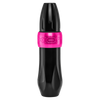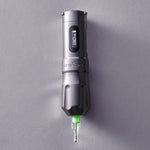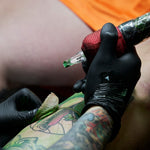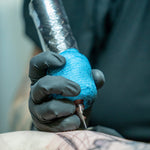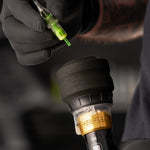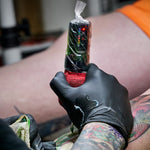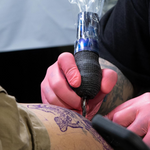

Grip diameter decides how your hand sits on the machine, how much pressure you need to apply, and how comfortable you stay through long sessions. Get it right and your machine feels like an extension of your hand. Get it wrong and you’ll notice the difference every time you pick it up.
Overall, your tattoo grip size shapes your control, comfort, and how many good working years your hands have left in them—so here's how to choose your next tattoo grip wisely.
Why Tattoo Grip Diameter Changes Control and Fatigue
Your hand is constantly making small adjustments as you tattoo — tiny movements that help you maintain control. Grip diameter plays a role in how much tension your fingers need to create those adjustments.
Think about the natural position of your hand when it’s relaxed at your side. Your fingers naturally curl into a soft, comfortable shape. The right grip diameter should match that position, filling your hand without forcing your fingers to stretch, squeeze, or overcompensate. That’s why different grip diameters work for different artists: our natural, most comfortable grip shape is different from person to person.
Thinner Tattoo Grips versus Thicker Tattoo Grips: What’s the Difference?
While preferences vary due to natural grip form and hand size, there are some general truths about thin tattoo grips versus thick.
A thin tattoo grip puts more of your fingertips in contact with the machine. That direct contact can support precise movements during fine line, single needle, and detail work.
However, a narrow diameter might make your fingers curl farther and pinch harder. The extra effort can become more noticeable and overall fatiguing as a session continues.
A thicker tattoo grip, on the other hand, gives your hand more surface area to hold onto, which can help reduce tension during shading, color packing, and longer sessions. The tradeoff is that a larger grip can slightly reduce the direct feel between your fingertips and the machine, which some artists prefer for fine, detailed work. Many artists choose their grip size based on the style they’re tattooing.
Common Tattoo Grip Diameter Ranges
Most standard tattoo grips fall between about 25mm and 38mm. Extra-wide grips go beyond that range for artists who want more palm contact.
|
Grip Diameter |
Typical Feel |
Good for |
|
25mm to 28mm |
Slim and responsive |
Fine line, single needle, PMU, and detail work |
|
30mm to 33mm |
Balanced feedback and support |
General lining, shading, and mixed styles |
|
35mm to 38mm |
Fuller with less need to pinch |
Color work, soft shading, and longer sessions |
|
40mm and above |
Extra-wide with broad palm contact |
Extended sessions, color packing, and larger hands |
These are starting points. Hand size and training can matter more than tattoo style.
For more information on extra-wide designs, read Does Size Matter? Introducing the Gorilla GripOpens a new window.
What Determines Your Ideal Tattoo Grip Size?
The diameter chart above gives you some general guidelines, but it can’t account for every artist and their different preferences. Consider three factors when choosing your next tattoo gri:
- Hand Size: Larger hands may feel cramped around a narrow grip, while smaller hands may stretch around an extra-wide one. In a relaxed hold, your fingers should make secure contact without overlapping deeply or reaching.
- Grip Style: A pencil-style hold relies on fingertip contact, so slim and mid-size grips often feel direct. An overhand or palm-supported hold spreads contact across a larger area and may work better with a wider grip.
- Technique: Fine line work benefits from clear feedback, while shading and color packing use broader movements. Grip pressure and training also matter.
If you squeeze hard, try one size wider. If the machine feels slow or disconnected, step down one size and compare.
Grip Material and Texture Matter as Much as Size
Material and surface can make two grips of the same diameter feel different.
- Knurled Metal: Textured surfaces increase friction and provide a more secure hold, especially during long sessions when grip stability matters. However, aggressive knurling can create pressure points and cause finger fatigue over time.
- Smooth Metal: A smooth grip allows easier rotation and repositioning in the hand, but it can become slick when exposed to moisture or residue. The Slim 28mm GripOpens a new window is a reusable, autoclavable option made from aerospace-grade aluminum.
- Rubber and Silicone: These materials add traction with a small amount of give. FK Irons' 33mm Disposable Tattoo GripsOpens a new window include silicone, rubber, and foam options for comparing materials at the same diameter.
- Memory Foam and EVA Foam: Foam compresses under the fingers and spreads pressure across a wider area. Ergo Disposable Foam CoversOpens a new window use soft EVA foam, fit grips from 28mm to 40mm, and reach 51mm at the widest point.
Test material and diameter together because texture and covers can change the pressure and final width.
How Grip Diameter Interacts With Machine Balance

Grip diameter can affect more than comfort—it can also influence how a machine’s weight is distributed in your hand. A larger or heavier grip adds weight farther from the machine’s motor, which can shift the balance point and change how the machine feels during use.
For wireless machines, the battery also plays a role in overall balance. A rear-loaded setup may feel different from one with more weight toward the front. Install your grip, cartridge, and battery (if applicable), then hold the machine at your normal working angle. A well-balanced setup should feel stable and controlled without requiring your wrist to constantly compensate..
Why Long Sessions Demand Better Grip Ergonomics
A six-to-eight-hour session combines repeated movement, grip force, vibration, and sustained posture. As your hand tires, your fingers may squeeze harder, your wrist may take over smaller movements, and your shoulder may rise.
A grip can't solve every ergonomic issue. Chair height, forearm support, working angle, and recovery time also matter.
To reduce strain:
- Support your forearm by adjusting your chair and client.
- Take a few minutes each hour to release the machine and change position.
- Pay attention to tingling, numbness, or pain instead of working through it.
If symptoms continue after a session, speak with a medical professional. A grip may improve comfort, but it can't treat an existing injury.
How Ergo Shield Grips Simplify Setup
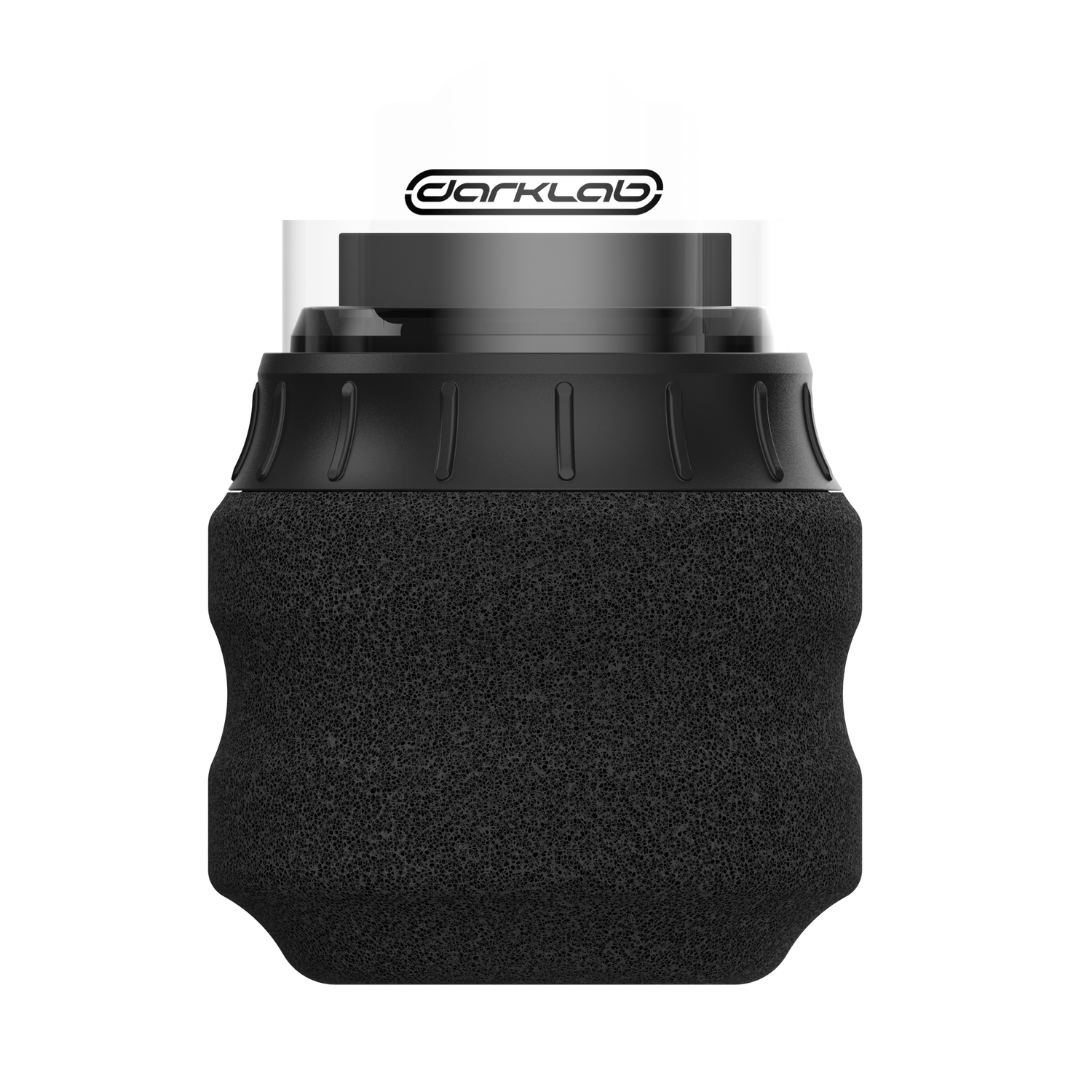
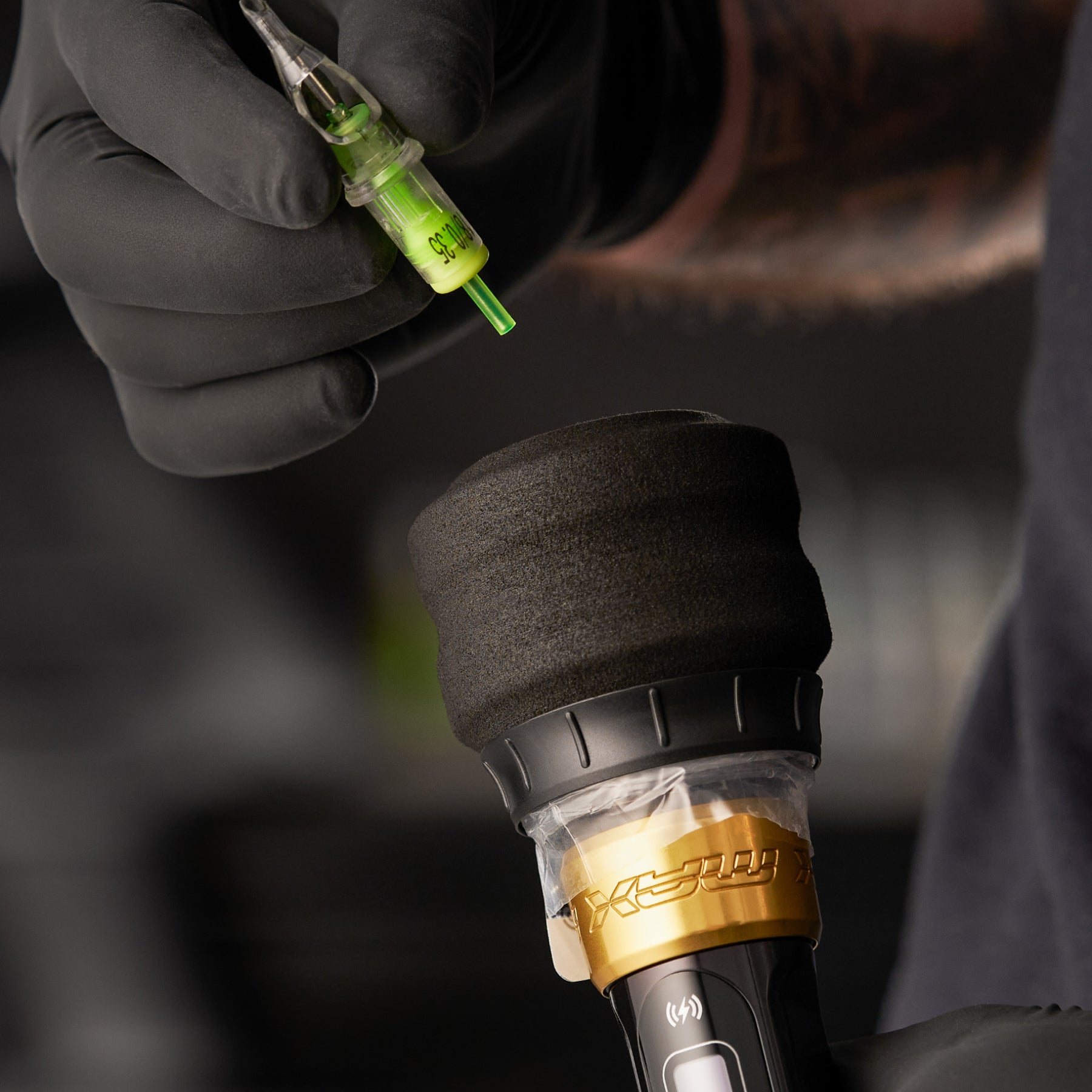
Darklab Ergo Shield grips combine a foam grip with an integrated machine barrier. Artists get a fresh grip-and-barrier system for each client without separate tape, grip wrap, clip cord bags, paper towels, or improvised layers.
Setup takes less than 10 seconds.
The current FK Irons grip lineupOpens a new window includes Ergo Shield options in 55mm and 60mm foam diameters. Because these sizes are much wider than standard grips, test control and balance before a full appointment.
How to Find Your Size Without Buying Everything
There's no universal tattoo grip size, so test one change at a time.
Use your current grip as a baseline. Note grip pressure, late-session comfort, fine control, and machine balance.
Next, try one size larger and one size smaller on similar work. Keep the material and machine setup the same when possible, and give each option more than one full session.
The Ergo Shield Sample PackOpens a new window offers a lower-commitment way to try the combined grip-and-barrier format. Artists can also compare sizes within the shop, but tattooing requires a new disposable grip or a properly sterilized reusable grip.
Record comfort, control, fatigue, and balance. The right grip should remain secure without excessive pressure.
Choose a Grip Based on Real Sessions
Start close to your current diameter, change one factor at a time, and judge the complete setup during real work. Check out all our available grip sizes and materials for different hands, techniques, and session demands.