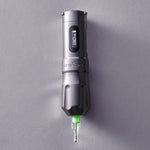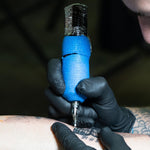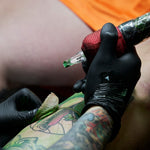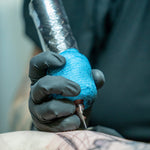

Can one tattoo machine handle lining, shading, and color packing? Absolutely. A quality all-rounder gives you the versatility to move between core techniques—lining, shading, and color packing—without switching machines. Adjustable-stroke machines offer additional flexibility, but a fixed stroke can be just as capable when it suits your technique and preferences.
Stroke length, motor response, balance, speed control, and cartridge compatibility all influence how comfortably and consistently you work. Here's what to consider when choosing an all-rounder.
6 Essential Features of an All-Around Tattoo Machine
A tattoo machine doesn't need every adjustment available to qualify as an all-rounder. It needs to deliver the control and performance you expect across lining, shading, and packing. These six features will help you determine whether a machine can handle all three the way you prefer to work.

But First, Does One Machine Fit the Way You Work?
An all-rounder should handle lining, shading, and color packing without requiring you to fight the machine's response. But technical versatility doesn't automatically make an all-rounder machine the right fit for every artist.
Consider your preferences before choosing:
- Do you prefer a softer or more direct hit?
- Are you comfortable working across techniques with one stroke?
- Do your usual cartridges perform well with the machine?
- Does the weight and balance suit longer sessions?
- Can its power options support your typical workload?
If you prefer significantly different machine responses for specific techniques, an adjustable stroke or multiple dedicated machines may suit you better. If you value a familiar fixed stroke and are comfortable adapting your settings and technique, a fixed-stroke all-rounder may be exactly what you need.
Ultimately, the best all-rounder isn't necessarily the machine with the most adjustments. It's the one that performs consistently across your work and feels right in your hand.
Explore our recommendations for tattoo machines for lining, shading, and color packingOpens a new window to compare your options.
However, if you are seeking one machine that can do it all, here are the 6 key factors to bear in mind:
1. A Stroke That Supports Your Main Techniques
Stroke length influences how a machine hits and responds across different techniques. Longer strokes are often the go-to for bold lines and solid packing, while shorter strokes tend to offer a softer response for shading and delicate work. But those aren't rigid rules. Your needle grouping, hand speed, and technique also affect the result.
An adjustable stroke lets you change the machine's mechanical response between techniques. A fixed stroke offers a familiar, consistent feel that many artists prefer.
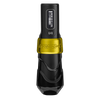
Take the FK One UpdateOpens a new window, available in two fixed-stroke options:
- 3.0mm: A softer response suited to shading, black-and-grey work, and artists who prefer a gentler hit.
- 4.0mm: A more direct hit favored for bold lining, solid packing, and artists who prefer a stronger response.
Both can handle multiple techniques, depending on your preferred settings, cartridges, and approach.
Remember that stroke length describes the distance the machine's drive travels, not how deeply the needle enters the skin. For a closer look at how stroke affects performance, explore our tattoo machine stroke length guideOpens a new window.
2. A Motor That Handles Changing Resistance
Switching from a fine liner to a large magnum changes the resistance your machine encounters. An all-rounder needs to maintain a predictable response across those different loads without forcing you to constantly compensate.
Consider two factors:
- Performance under load: Does the machine maintain consistent operation with your preferred needle groupings?
- Motor response: Does the machine feel predictable as you move between lining, shading, and packing?
Torque contributes to how a motor handles resistance, but it doesn't tell the whole story. Power delivery, electronics, and the drive mechanism also influence performance.
The FK One Update features a brushed coreless motor with an 80–180Hz operating range. Its motor and drive system provide the response you need for a variety of tattooing techniques, while low vibration helps maintain comfortable handling.
Rather than choosing a machine based on motor specifications alone, consider how it performs with the cartridges and running speeds you actually use on a regular basis. Learn more about tattoo machine torque and motor performance hereOpens a new window.
3. Weight and Balance That Suit Your Hand
An all-rounder needs to stay comfortable through every stage of a session. A machine that feels great for a few lines might become less comfortable after hours of shading and packing.
And balance, or overall design, matters just as much as (if not more than) machine weight. Machines can be front-heavy, center balanced, or back-heavy depending on its design and what grips you use. Consider whether you prefer a front-heavy, rear-heavy, or more evenly balanced setup, and how comfortably you can maintain your natural grip, factoring in other elements like vibration.
4. Speed Control With Room for Small Adjustments
An all-rounder should give you enough control over running speed to move comfortably between techniques. Fine adjustments can help you match the machine's response to your hand speed, cartridge grouping, and preferred approach.
Voltage controls motor speed on voltage-controlled rotary machines, while Hertz measures operating frequency in cycles per second. Two machines running at the same voltage won't necessarily operate at the same speed, and matching their Hertz won't guarantee an identical hit.
For more detail, see our guide to Hertz versus voltageOpens a new window.
5. Battery Options That Support Your Session
An all-rounder needs to keep up with your entire workload, including longer sessions that involve multiple techniques. Battery capacity matters, but so do runtime, charging options, and how easily you can swap batteries.
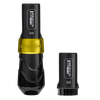
Consider how much battery power your typical appointments require and whether you prefer swapping batteries instead of interrupting your workflow to recharge. With two included batteries, you can keep one charging while the other is in use. The charging dock requires a separate power adapter.
Learn more about choosing a wireless tattoo machineOpens a new window.
6. Cartridge and Grip Compatibility That Keeps Your Options Open
Stroke length and motor performance are only part of the equation. Your cartridges also influence how a machine responds, so an all-rounder should work comfortably with the needle groupings you rely on for lining, shading, and packing.
Pay attention to two things:
- Cartridge compatibility: Confirm that your preferred cartridges fit securely and operate correctly with the machine.
- Working response: Needle count, diameter, taper, and membrane tension can change resistance, even between cartridges with similar configurations.
Switching cartridges may require adjustments to your running speed or technique. Don't assume two cartridges will perform identically just because they share the same grouping.

Everyday Features That Make a Tattoo Machine Easier to Use
Beyond performance, practical features can make a difference when you're using one machine throughout an entire appointment. Accessible controls, secure adjustments, and straightforward battery changes help keep your workflow moving.
These features may not determine how a machine lines, shades, or packs, but they contribute to how easily it fits into your daily routine.
Meet the FK One Update: Your Everyday All-Rounder
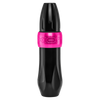
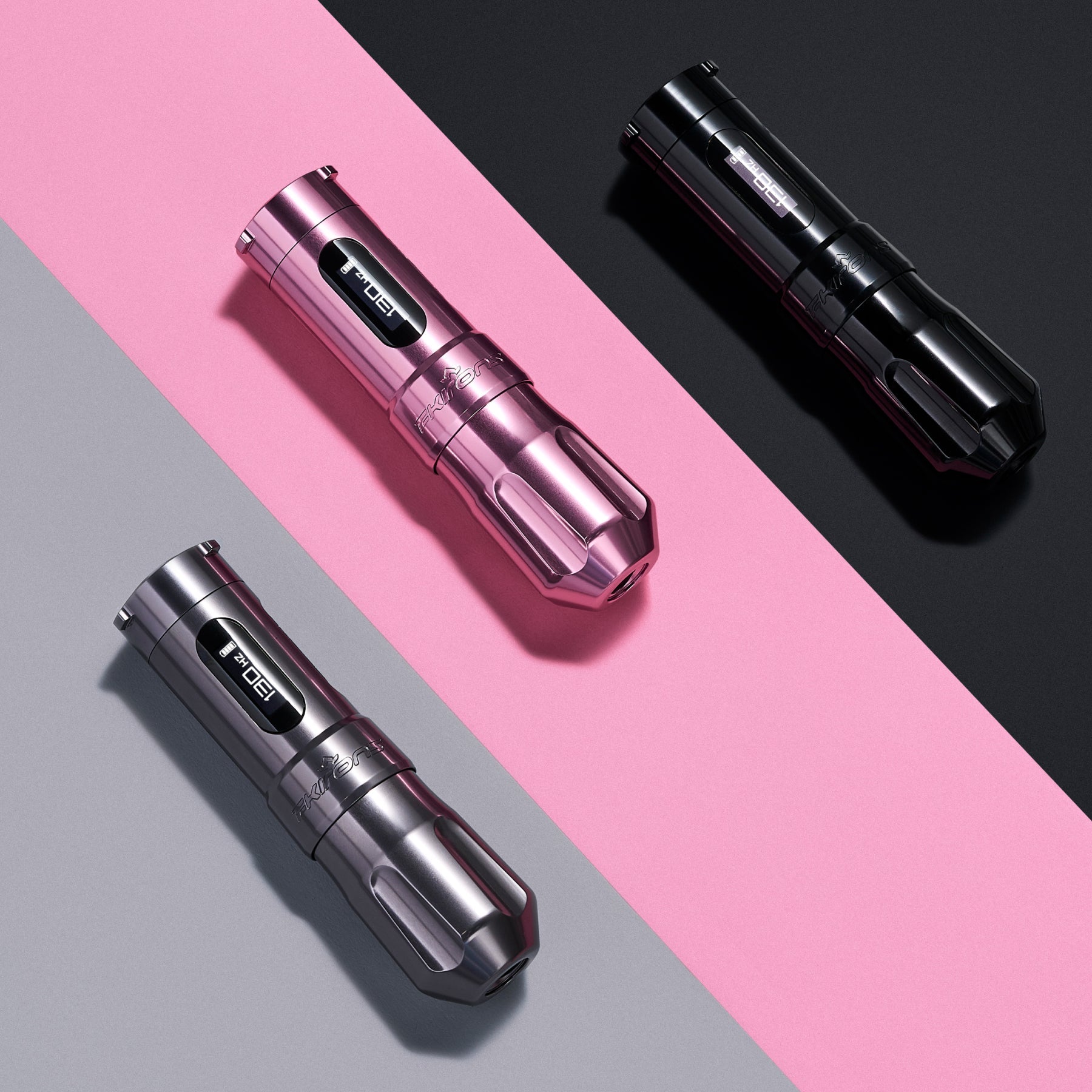
The FK One UpdateOpens a new window brings the versatility you need for lining, shading, and color packing into one streamlined machine. Choose between a 3.0mm or 4.0mm fixed stroke to suit your preferred hit, with a responsive brushed coreless motor and precise 0.2V adjustments for greater control.
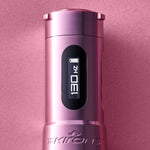
Swappable batteries, a reversible 1.1-inch LCD, and Ergo Shield grip compatibility round out a setup made for your daily rotation. No unnecessary complexity. Choose the 3.0mm or 4.0mm stroke that suits your technique, and take on lining, shading, and color packing with an all-rounder setup that keeps things simple and can handle it all.